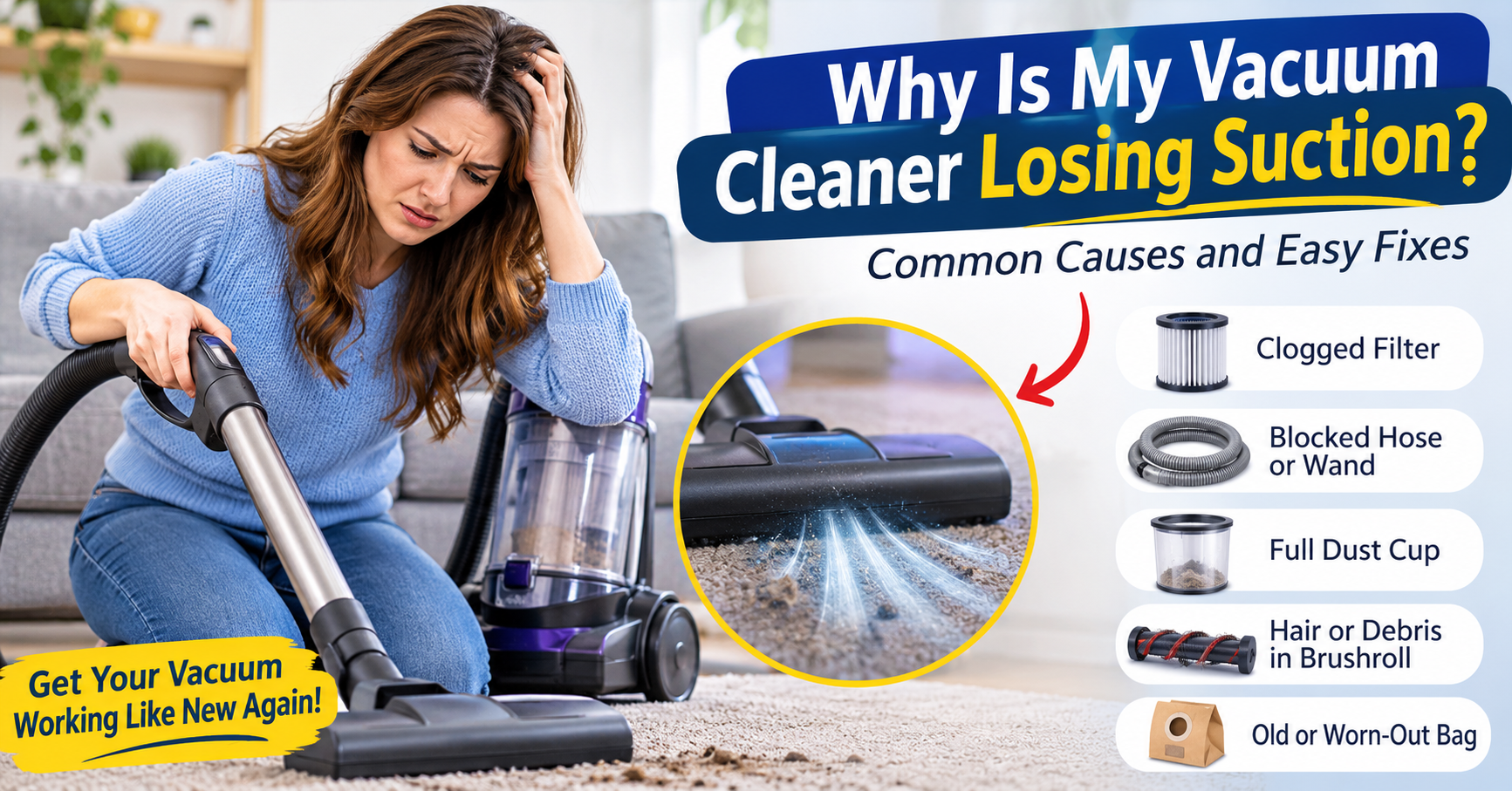
Few things in home maintenance are more frustrating than pushing your vacuum cleaner back and forth across the rug, only to realize it is leaving behind dirt, hair, and crumbs. A sudden or gradual loss of suction is one of the most common issues homeowners face.
The good news? A loss of suction power rarely means your vacuum motor is dead. In over 90% of cases, the drop in performance is caused by simple airflow restrictions, clogged components, or worn accessories that you can diagnose and repair yourself in minutes.
This step-by-step troubleshooting guide covers why your vacuum is losing suction, how to fix it, proactive maintenance tips to prevent future power drops, and recommendations for high-performance vacuums engineered to resist suction loss.
1. How Vacuum Suction Works (The Physics of Airflow)
To fix suction loss, it helps to understand how your vacuum functions:
The Motor & Fan: The vacuum’s motor spins a fan, drawing air out of the unit and creating a partial vacuum (low pressure) inside.
Airflow Intake: Ambient air at higher pressure rushes in through the floor nozzle, carrying dust, pet hair, and debris along with it.
Filtration & Separation: The dirty air passes through cyclones, dust bags, or filters where particulate matter is trapped.
Exhaust: Cleaned air passes through the motor housing and back out into the room through exhaust ports.
Key Takeaway: Vacuuming relies entirely on continuous airflow. If anything restricts air moving from the floor nozzle to the exhaust, suction power drops instantly.
2. Top 7 Causes of Vacuum Suction Loss & Step-by-Step Fixes
Reason 1: Overfilled Dust Bin or Full Dust Bag
The Cause: As a bagless canister fills past the max fill line—or a paper dust bag becomes densely packed—air cannot flow freely through the dirt chamber.
The Fix:
For bagless models, empty the canister after every 1–2 uses. Never allow dirt to pack above the MAX line.
For bagged models, replace disposable bags when they are about 2/3 full. Do not wait until the bag feels rock hard.
Reason 2: Dirty, Clogged, or Wet Filters
The Cause: Fine particles like drywall dust, pollen, and flour clog micro-pores in foam, felt, and HEPA filters. Restricted filter pores cut motor airflow drastically, which can cause the motor to overheat and thermal shut-off features to trigger.
The Fix:
Turn off and unplug the vacuum.
Locate all filters (pre-motor and post-motor/HEPA).
Wash washable filters under cold running tap water (no soap) until the water runs clear.
Crucial Step: Allow washed filters to air dry for at least 24 to 48 hours before reinstallation. Running a vacuum with damp filters will ruin the motor and cause mildew.
Replace non-washable HEPA filters once every 6–12 months.
Reason 3: Physical Blockages in the Hose or Wand
The Cause: Clumps of hair, socks, coins, or small toys often get caught in the narrow bend of the handle, telescopic wand, or flex-hose.
The Fix:
Detach the extension hose and main wand.
Drop a coin through the top of the metal tube. If it doesn’t fall out the other end, there is a blockage inside.
Gently insert a broom handle or wire coat hanger into the hose/tube to push the clog out. Take care not to puncture flexible rubber hoses.
Reason 4: Tangled Brush Roll / Floor Head Blockage
The Cause: Long human hair, pet fur, strings, and carpet fibers wrap around the brush bar. This slows down roller rotation and blocks the intake channel directly behind the brush roll.
The Fix:
Flip the cleaner head over.
Use scissors or a seam ripper to cut wrapped hair along the brush groove.
Inspect the throat (the air passage behind the roller) for stuck debris, gravel, or pet hair.
Reason 5: Air Leaks, Cracks, or Loose Connections
The Cause: If air is escaping through a cracked hose or loose fitting before reaching the dust bin, suction at the floor head will plummet.
The Fix:
Turn the vacuum on and listen for high-pitched whistling or hissing sounds.
Inspect the flexible hose for splits, rubber gasket tears, or loose click-lock fittings.
Temporarily seal small hose punctures with silicone tape or replace damaged hose assemblies.
Reason 6: Snapped, Stretched, or Worn Drive Belt
The Cause: On corded upright vacuums, a rubber belt connects the motor shaft to the roller brush bar. If this belt stretches, slips, or snaps, the roller won’t agitate carpet fibers, creating the illusion that suction power has dropped.
The Fix:
Remove the bottom plate of the vacuum head.
Check the tension of the rubber belt. If it is loose, cracked, or melted, replace it with a new OEM belt.
Reason 7: Incorrect Floor Height Setting
The Cause: If an upright vacuum’s height adjustment is set too low for high-pile carpet, the cleaner head seals flat against the rug, stopping airflow entirely. Conversely, setting it too high leaves a gap that reduces suction seal.
The Fix: Adjust the floor height dial so the brush bar lightly engages carpet fibers while maintaining steady airflow underneath.
4. Expert Maintenance Tips for Sustained Vacuum Power
To prevent future performance drops, maintain your equipment with this routine schedule:
After Every Use: Empty the dust container.
Weekly: Inspect the brush bar and remove tangled hair or threads.
Monthly: Wash pre-motor foam and felt filters under cold water. Tap out loose dust from post-motor HEPA filters.
Every 6 Months: Inspect hoses for hairline fractures or micro-tears. Replace non-washable HEPA filters.
Annually: Replace drive belts on upright models and replace sealed rubber gaskets if worn.
5. Top Vacuum Recommendations (Engineered Against Suction Loss)
If your old unit is past repair and suffering from permanent motor degradation, consider upgrade options designed with cyclonic air separation technology, sealed systems, or self-cleaning brush bars:
1. Best Overall Cordless Vacuum: Dyson V15 Detect
Why it doesn’t lose suction: Features 14 concentric root cyclones that generate forces of up to 100,000g to separate fine dust from the airstream without clogging the primary filter.
Key Specs: Up to 60 min battery runtime, piezo sensor dust tracking, HEPA filtration.
Best For: Pet owners, hard floors, and carpets requiring high-power cordless convenienc.
2. Best Corded Upright Vacuum: Shark PowerDetect Upright with DuoClean
Why it doesn’t lose suction: Uses anti-allergen complete seal technology with multi-cyclonic action that keeps dust away from the motor filters.
Key Specs: Lift-Away canister design, dual brush rollers, self-cleaning anti-hair-wrap roller.
Best For: Whole-home deep cleaning and high-pile carpets.
3. Best Premium Bagged Canister: Miele Complete C3 Series
Why it doesn’t lose suction: Sealed 9-layer HyClean dust bags compress dirt while maintaining airflow across the outer walls, preventing performance drop-off even when nearly full.
Key Specs: Ultra-quiet motor, AirClean HEPA system, 20-year design lifespan.
Best For: Allergy sufferers and heavy-duty home cleaning.
6. Frequently Asked Questions (FAQ)
Can a worn-out motor cause loss of suction?
While possible, motor failure usually results in unusual grinding noises, smoke, burning smells, or complete failure to turn on. Suction loss alone is almost always caused by airflow blockages or dirty filters.
How do I know if my vacuum hose has an air leak?
Turn on the machine, detach the floor head, seal your palm over the end of the hose, and feel for suction. Listen closely along the length of the hose for hissing noises. You can also brush soapy water over suspected cracks—if bubbles form, air is escaping.
Why does my vacuum lose suction only on carpet?
This usually occurs when the height setting is too low (restricting intake airflow against dense carpet pile) or when the brush bar belt has stretched, preventing the roller from spinning under carpet friction resistance.
Summary Checklist to Restore Your Vacuum Today
Unplug the machine.
Empty dust canister or replace disposable bag.
Wash all pre-motor filters and dry thoroughly for 24+ hours.
Remove brush roller hair tangles and clear the throat intake.
Check wand and flex-hose for physical blockages.
Reassemble securely and test performance.